Thirty minutes. No pitch. Just a map of what your marketing is missing. Send your brief →

Email marketing that turns the inbox into a revenue channel from MQL to closed-won.
Pipeline-attributed b2b email marketing services built on a Deliverability-First Send Architecture and an Inbox-to-Pipeline Lifecycle Map. Authenticated sending, lifecycle sequences mapped from first touch to expansion, and monthly reporting that ties every send to MQLs and closed-won revenue. Recurring retainers starting at £2,497.


4.9 from 2500+ reviews
A b2b email marketing service built on authenticated deliverability, lifecycle-mapped sequences, and reporting that ties every send to attributed pipeline not opens.
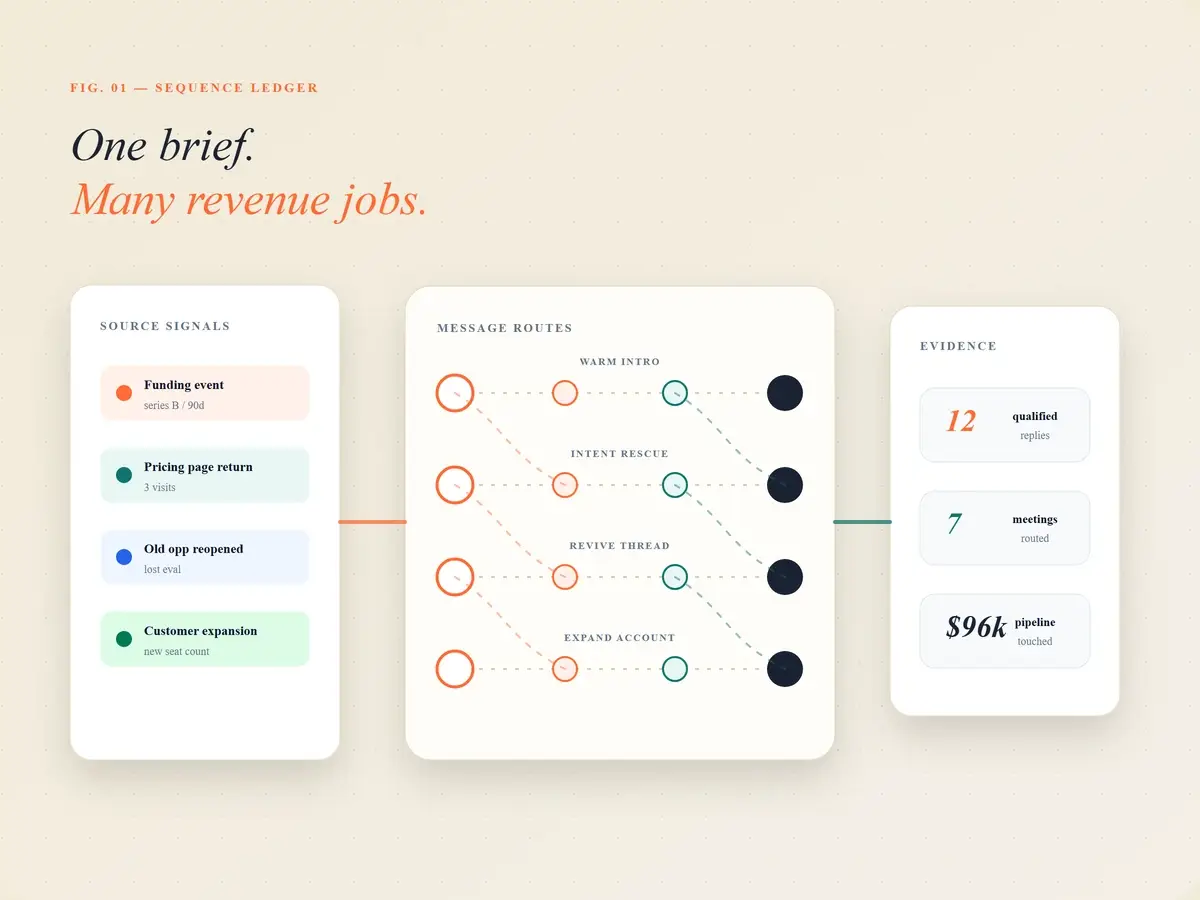
The Inbox-to-Pipeline Lifecycle Map, every sequence has a job in your funnel.
The most common frustration we hear from B2B marketing leads: “There’s a welcome email.
There’s a monthly newsletter. That’s the entire lifecycle program.” Every RankThread engagement starts with an Inbox-to-Pipeline Lifecycle Map, a documented plan that plots every planned sequence across the buyer journey: acquisition, MQL nurture, SQL acceleration, post-purchase onboarding, expansion, and win-back.
The default allocation is roughly 25% acquisition, 45% nurture and evaluation, 20% post-purchase and expansion, and 10% re-engagement, tuned per ICP and sales cycle. Every sequence has a trigger, an intended pipeline outcome, and a metric it’s measured on. The map is versioned in your workspace, not ours, and revised quarterly against actual pipeline-influenced data, so the program is always accountable to the revenue number, not the send volume.
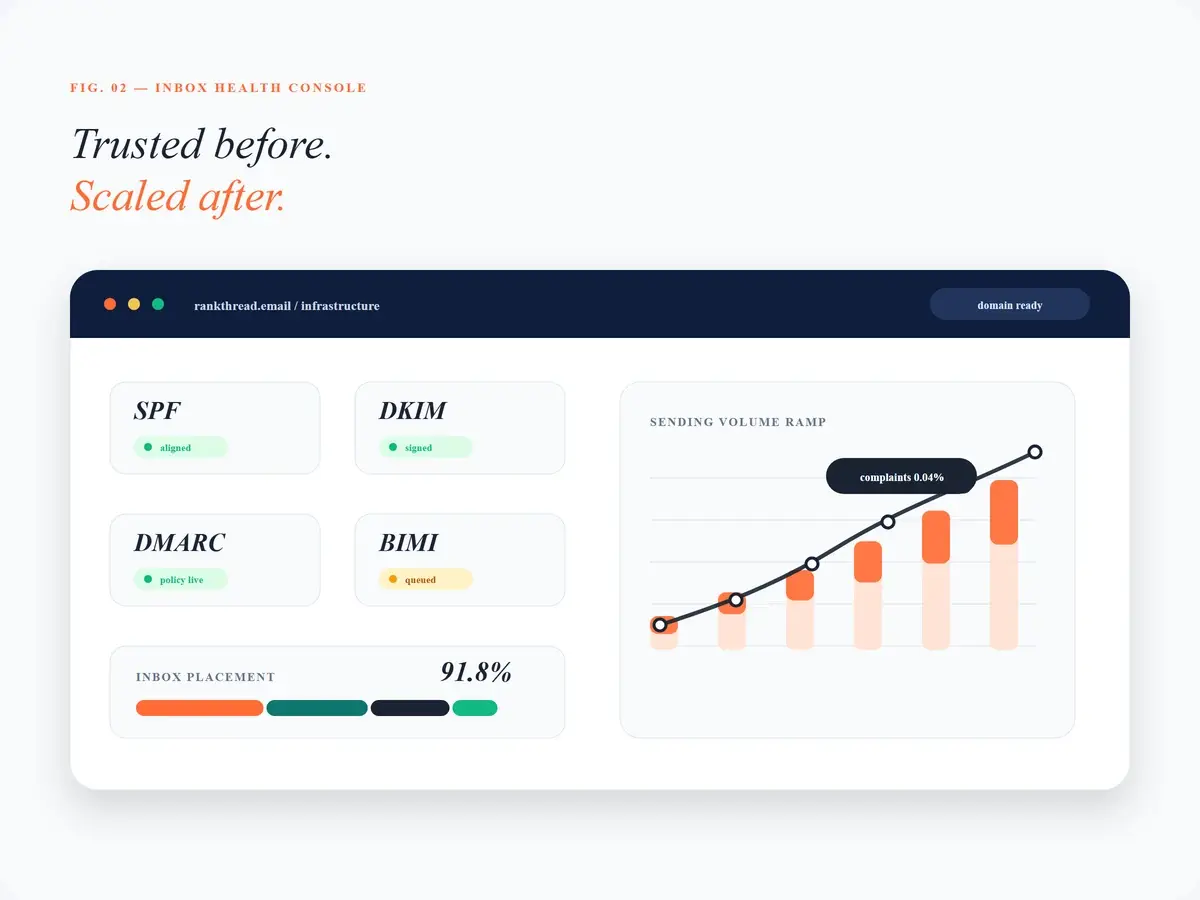
The Deliverability-First Send Architecture, authenticated sending before campaign one.
The second frustration we hear is harder to recover from: “Our last program ran cold outreach off our main domain. Now our newsletter to opted-in subscribers goes to promotions at best, spam at worst.” In 2026, that’s no longer a slow-building reputation issue, Gmail, Yahoo, and Microsoft enforce bulk sender requirements that turn misconfigured sending into immediate delivery loss.
The Deliverability-First Send Architecture is the infrastructure built before the first campaign ships: dedicated subdomains for marketing, outreach, and transactional streams so one pressured channel never burns the others; SPF, DKIM, and DMARC configured with alignment and policy at minimum p=quarantine, with a documented path to p=reject; domain and IP warming for new sending properties; and ongoing monitoring via Google Postmaster Tools and Microsoft SNDS against the benchmarks that matter, spam complaint rate below 0.1%, hard bounce rate below 2%, and inbox placement tracked monthly against the 90%+ B2B benchmark. Deliverability stops being a quarterly crisis and starts being a baseline.
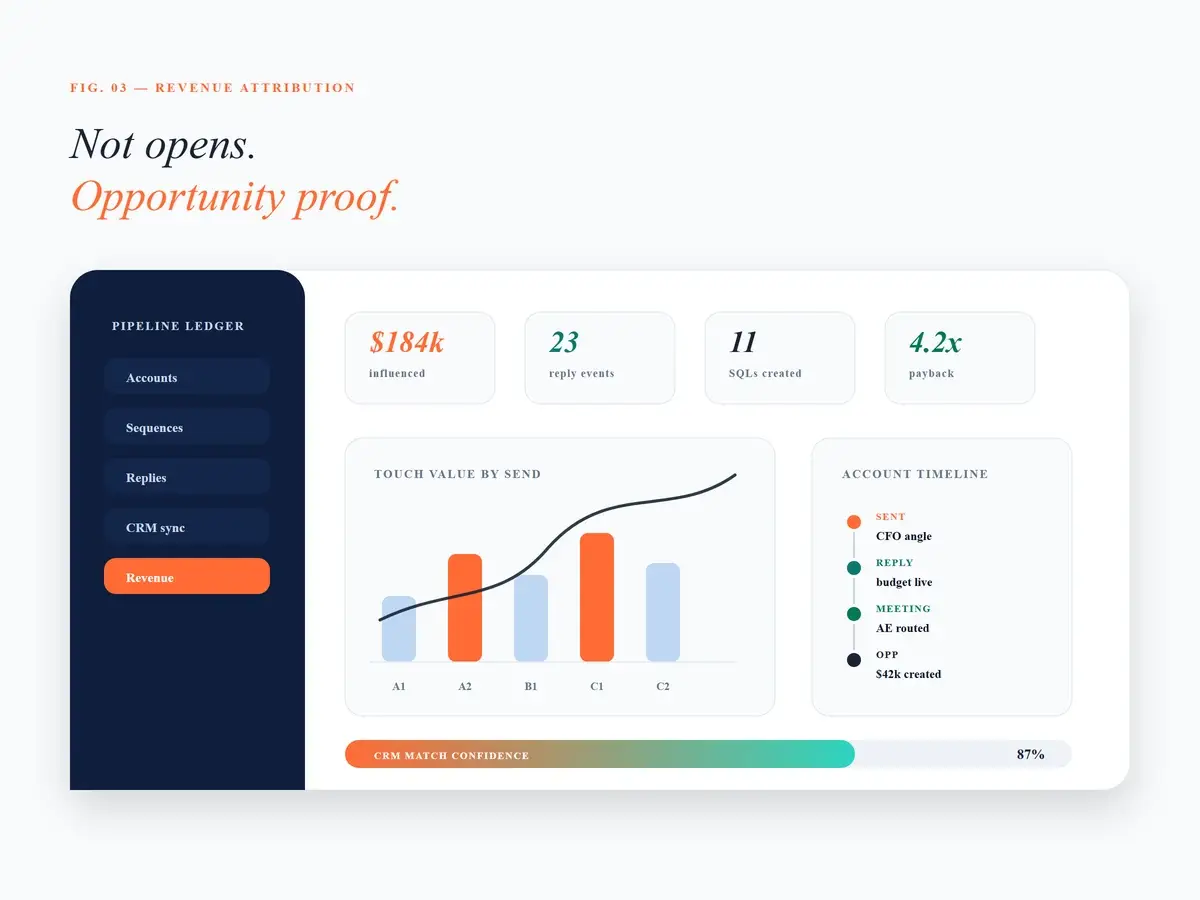
Every send tied to pipeline a metric stack built for a post-MPP inbox.
The third frustration is the one that costs marketing leads the CFO conversation: “Our ESP shows sends and clicks. Our CRM shows deals.
Nobody connects the two.” And the problem is compounding, since Apple Mail Privacy Protection rolled out, roughly half of reported opens across B2B programs are inflated by Apple’s prefetch, so teams optimizing against open rates are optimizing against noise. Our reporting layer runs on the metric stack that still works in 2026. Every sequence is tagged to a lifecycle stage and an intended outcome, tracked through your CRM via UTMs, form attribution, and multi-touch models in HubSpot, Marketo, or Salesforce.
Primary KPIs are click-through rate, click-to-open rate, reply rate, and email-attributed pipeline, open rate is reported as a directional signal only. Monthly reports show email-sourced MQLs, email-influenced pipeline dollars per sequence, sales cycle acceleration, and CAC payback on paid list growth.
When the program needs the upstream editorial engine powering the sequences or the dashboards underneath the reporting layer, our content marketing services and multi-touch attribution and revenue dashboards plug in cleanly from day one.
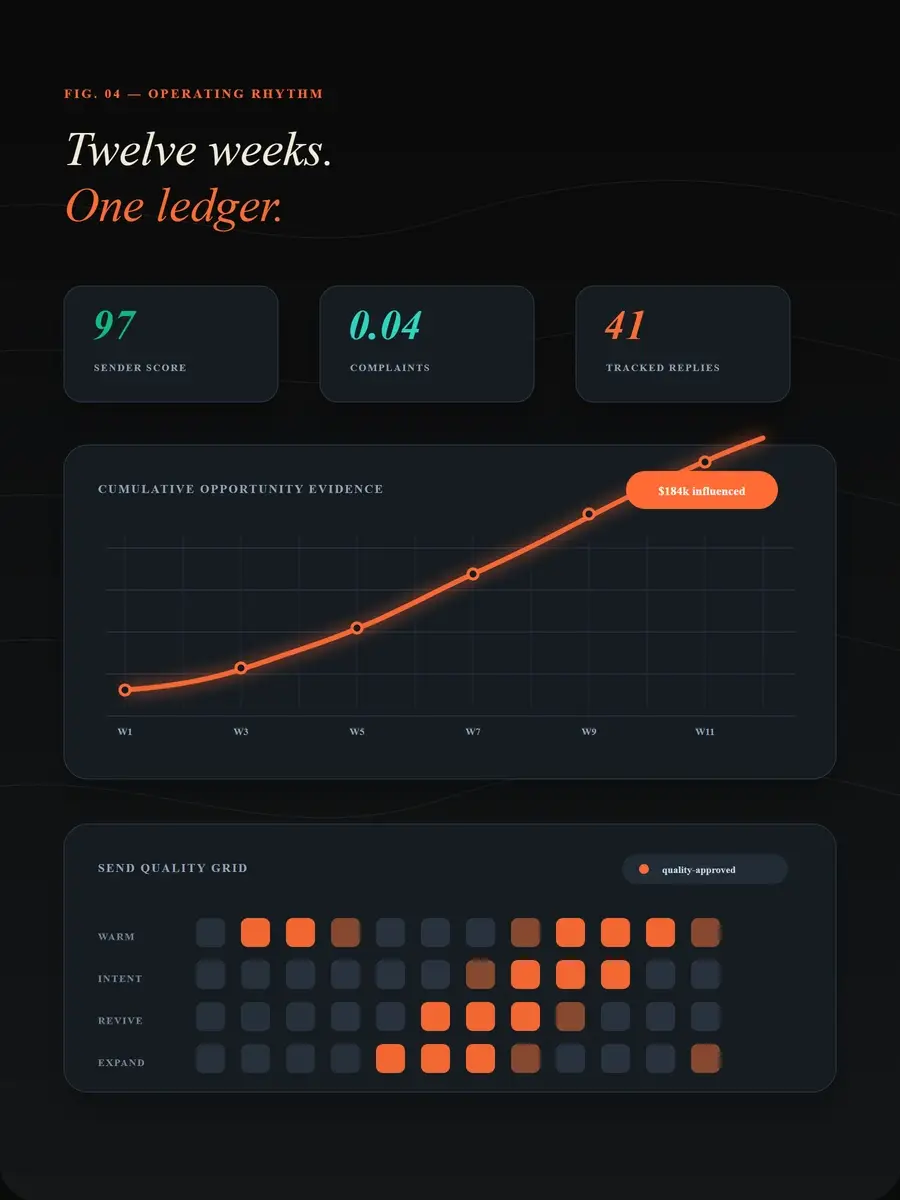
A 5-phase b2b email marketing process, built on one rule: every send is authenticated, mapped, and measured.
01 / ICP mapping and deliverability audit
One week. Before a single sequence is written, we define the Ideal Customer Profile in enough detail that the email program could not have been run by a competitor, the actual buying committee, the real triggers that open a purchase cycle, the objections that most often kill deals, and the words your buyers use when they describe the problem.
We interview your sales team, audit the lifecycle stages already defined in your CRM, and map the sequences you’ll need against them. In parallel, we run a full deliverability audit: DNS authentication state, sender reputation via Google Postmaster Tools and Microsoft SNDS, list health, domain sending history, and the quantifiable impact Apple Mail Privacy Protection is having on your current reporting.
The deliverable is a baseline report plus a 90-day program brief, both approved by you before anything else moves.
02 / Inbox-to-Pipeline Lifecycle Map
One week. We document the full lifecycle map, every planned sequence plotted across acquisition, MQL nurture, SQL acceleration, post-purchase, expansion, and win-back, with allocation tuned to your ICP and sales cycle.
For each sequence: the trigger, the owning team, the deliverable specs, and the pipeline metric it’s measured against. The segmentation plan covers firmographic, behavioral, and engagement tiers. The platform plan is built on the CRM and ESP you already run, HubSpot, Marketo, Salesforce Marketing Cloud, or Customer.io so nothing is rebuilt on our side that you’ll have to re-migrate later. You approve the architecture before production begins.
The map is versioned in your workspace and revised quarterly against pipeline performance, so the plan stays honest to what’s actually working.
03 / Deliverability-First Send Architecture build
One to two weeks, with domain warming continuing in parallel across weeks three and four. DNS is configured on dedicated subdomains: marketing, outreach, and transactional streams separated so one channel’s reputation can never compromise the others. Full authentication stack on every sending domain, SPF, DKIM, and DMARC aligned, with DMARC at minimum p=quarantine and a documented migration path to p=reject, plus BIMI activation where a verifiable logo asset is available. ESP-to-CRM sync is wired end-to-end, lead scoring is aligned to lifecycle stage thresholds, suppression logic is codified, and one-click unsubscribe is compliant across every send. The monitoring layer goes live before the first campaign: Google Postmaster Tools, Microsoft SNDS, and dashboards tracking spam complaint rate, hard bounce rate, and inbox placement against the 90%+ B2B benchmark. Nothing ships until the infrastructure is green.
04 / Sequence production, launch, and sales enablement
Ongoing, monthly. Production runs on the lifecycle calendar locked in Phase 02. Every sequence is briefed against the stage it serves, the behavioral trigger that fires it, and the pipeline outcome it’s built to drive, then written by a dedicated email strategist and copywriter assigned to your account for the length of the engagement.
Sales enablement is built into the workflow, decision-stage email templates for SDR and AE cadences, packaged for your sales team to send during active deal cycles where email-influenced pipeline velocity actually compounds. List hygiene runs on a monthly cadence: inactive subscribers flagged, re-engagement sequences triggered, and a quarterly sunset pass to remove contacts that have stopped engaging, because a list with twelve months of inactive cohorts damages deliverability for the subscribers who are still opening.
05 / Pipeline attribution and monthly reporting
Monthly, with a quarterly strategic review. Every month you receive an Inbox-to-Pipeline Report: email-sourced MQLs, email-influenced pipeline dollars per sequence, sales cycle acceleration, CAC payback, and the deliverability benchmarks that underpin all of it, inbox placement, spam complaint rate, bounce rate, and domain reputation trend lines.
Every quarter, we audit the full sequence library, refreshing underperforming flows, sunsetting the ones the data says aren’t earning their keep, and rebalancing the lifecycle allocation based on what pipeline has actually moved.
The reporting stack runs through GA4, Search Console, and your CRM, HubSpot, Salesforce, Marketo, or equivalent. If you don’t have multi-touch attribution wired up yet, we set it up in Phase 01 so the reporting layer is real from month one.
B2b email marketing retainers with fixed monthly pricing, and exactly what's included.
Starter Inbox Engine
Deliverability foundation, lifecycle foundation, monthly reporting.
£2,497
/ per month
- Deliverability-First Send Architecture (DNS, authentication, warming)
- Inbox-to-Pipeline Lifecycle Map (documented and approved)
- 4 production-ready sequences per month across awareness, evaluation, and decision stages
- Monthly deliverability monitoring (inbox placement, complaint rate, bounce rate)
- Monthly Inbox-to-Pipeline Report
- Dedicated email strategist and quarterly strategic review
Built for founders, lean marketing teams, and b2b saas email programs that need a real lifecycle engine without the enterprise retainer.
Growth Inbox Engine
The standard b2b email marketing retainer.
£4,497
/ per month
- Everything in Starter, plus:
- 8 production-ready sequences per month across the full lifecycle
- Behavioral segmentation with monthly engagement-tier refresh
- Multi-touch attribution setup in your CRM
- Sales enablement email template library for SDR and AE cadences
- ABM-lite: triggered sequences for top-tier target accounts
- Quarterly deliverability audit and compliance review
The default for email marketing for manufacturers, email marketing for financial services, and most B2B verticals with 30-day-plus sales cycles.
Pipeline Inbox Engine
Enterprise-grade lifecycle operation.
£7,997
/ per month
- Everything in Growth, plus:
- 12+ production-ready sequences per month across the full lifecycle
- Full ABM email layer for named target accounts (triggered plays, account-level sequences)
- Custom pipeline attribution dashboards built inside your CRM
- Weekly async and monthly live cadence with your sales team
- Dedicated lifecycle strategist on retainer
- Advanced deliverability posture: p=reject DMARC migration and BIMI activation
- Executive reporting cadence for CMO and CRO stakeholders
For enterprise demand generation, ABM lifecycle layers, and programs with complex CRM topologies. If you need the search architecture layer underneath it all, look at search engine optimization.
Frequently asked questions about our b2b email marketing services.
How do you measure the ROI of b2b email marketing?
+
B2B email marketing ROI is measured by attributed pipeline and closed-won revenue per sequence, not opens, not clicks. Every sequence in our Inbox-to-Pipeline Lifecycle Map is tagged to a lifecycle stage (MQL nurture, SQL acceleration, expansion, win-back) and tracked through your CRM via UTMs, form attribution, and multi-touch models in HubSpot, Salesforce, or Marketo. Monthly reports show email-sourced MQLs, email-influenced pipeline dollars, sales cycle acceleration by sequence, and CAC payback on paid list growth. Open rate is reported as a directional signal only, because Apple Mail Privacy Protection inflates roughly half of reported opens in 2026. The primary KPIs are click-through rate, click-to-open rate, reply rate, and pipeline influenced. If a report can't tell you which sequence closed which deal, the program isn't measurable, and that's the problem we solve.
Why are my b2b emails going to spam even though subscribers opted in?
+
Opt-in emails land in spam because of infrastructure and engagement signals, not content. The top four causes in 2026: (1) incomplete authentication, where SPF, DKIM, and DMARC must all be configured and aligned, with DMARC at a minimum of p=quarantine to satisfy Gmail and Yahoo bulk sender requirements; (2) sender reputation damage from prior volume spikes, cold outreach run off the primary domain, or spam complaint rates above the 0.1% working ceiling; (3) list decay, where subscribers inactive for six or more months tank engagement signals that Gmail weights heavily in inbox placement decisions; (4) volume ramp without domain warming on a new sending property. The fix is architectural, not editorial. Our Deliverability-First Send Architecture separates marketing, outreach, and transactional streams on dedicated subdomains, enforces authentication, and monitors inbox placement monthly via Google Postmaster Tools and Microsoft SNDS before the program ships a single campaign.
What's the difference between a drip campaign and a lifecycle email program?
+
A drip campaign is a fixed time-based sequence. The same emails fire on the same schedule regardless of what the recipient does. A lifecycle email program is a behavioral system: sequences trigger on lifecycle-stage changes in your CRM, such as a lead hitting an MQL threshold, a trial converting to paid, or a customer going inactive for 60 days. Drip sequences assume every prospect moves at the same pace; lifecycle programs reflect the reality that B2B sales cycles range from 30 days to 18 months and that a prospect's behavior is a better routing signal than a calendar. Our programs default to lifecycle architecture built on HubSpot, Marketo, Salesforce Marketing Cloud, or Customer.io (whichever platform the client is already running), with drip sequences reserved only for genuinely time-based use cases such as event follow-up or scheduled onboarding cohorts.
How long does b2b email marketing take to generate attributed pipeline?
+
Expect meaningful pipeline contribution in 90 to 150 days and compounding returns from month 9 onward. The first 30 days are foundation work: deliverability build, lifecycle architecture, CRM integration, and domain warming on any new sending property. Active sequences begin producing MQLs in months 2 to 3 as the welcome, nurture, and decision-stage flows mature. Attributed pipeline typically begins in month 3 to 5 as MQL-to-SQL conversions compound and behavioral triggers start firing on real accounts. By month 9, a properly architected lifecycle program becomes one of the lowest-CAC acquisition channels most B2B companies operate. Programs that skip the deliverability foundation or rush past the Inbox-to-Pipeline Lifecycle Map in the first 30 days typically plateau by month 6 because the infrastructure underneath cannot support the volume.
Do you handle cold outbound email or outbound SDR sequences?
+
No. Our scope is opted-in lifecycle email marketing, not cold outbound. Cold outreach and lifecycle nurture are operationally incompatible: cold outbound runs on prospecting lists, requires its own dedicated sending infrastructure, and generates the exact spam complaint and reputation signals that destroy inbox placement for lifecycle mail. Running both off a shared domain is the single most common cause of the "our newsletter started landing in promotions six months ago" problem. Our Deliverability-First Send Architecture separates marketing, outreach, and transactional streams onto dedicated subdomains precisely so the two can coexist without cross-contamination. For B2B programs that need both lifecycle and outbound, we build and own the lifecycle side and design the sending architecture so the client's outbound team (or a dedicated cold outreach partner) can operate in parallel without burning the primary domain.
Let's map your next quarter of pipeline through the inbox.
Thirty minutes. No pitch. Just a clear read on where your current email program sits (deliverability posture, lifecycle coverage, attribution gaps) and what the Inbox-to-Pipeline Lifecycle Map would look like for your ICP, with a 90-day build path to attributed pipeline.
Book a call